
Deer-Resistant Plants for Wisconsin Landscapes
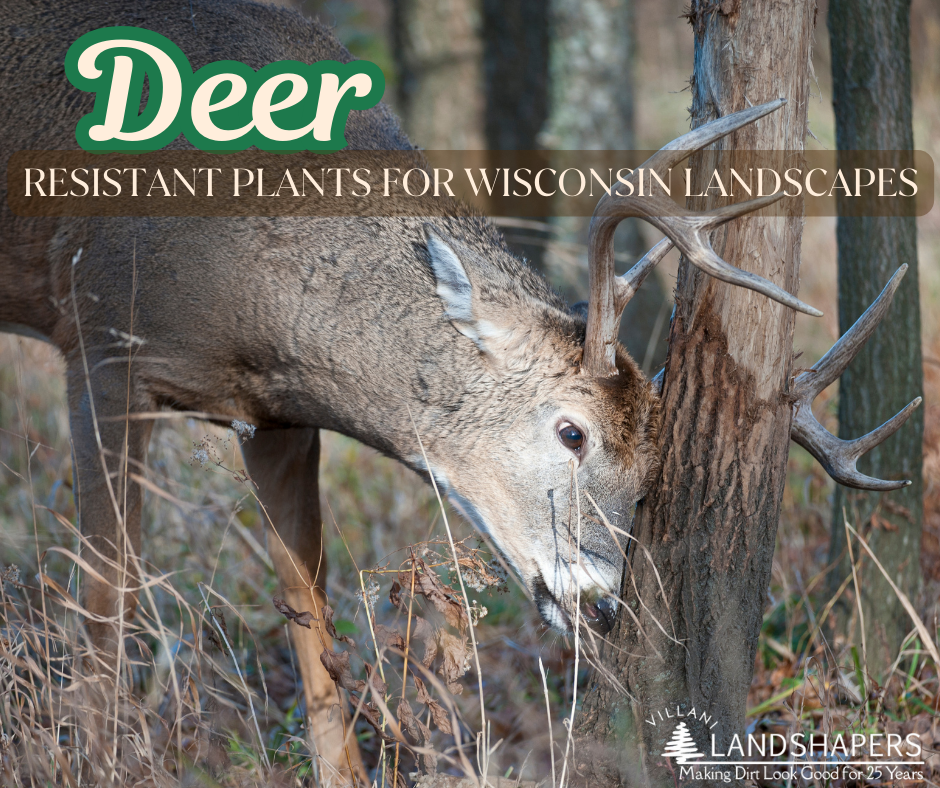
Deer Rubbing on tree
If you live in Wisconsin, you know that deer can be a major challenge for maintaining a beautiful landscape. While no plant is entirely deer-proof, some are far less appealing to these hungry visitors. By incorporating deer-resistant plants into your landscape, you can help protect your outdoor space while adding beauty and diversity to your garden.
Understanding Deer Behavior
Deer tend to avoid plants with strong scents, fuzzy or prickly textures, and those with toxic properties. However, when food is scarce, they may nibble on almost anything. Strategic plant selection, along with deterrents like fencing or repellents, can help minimize damage.
Top Deer-Resistant Plants for Wisconsin Gardens
Here are some of the best options to consider:
Perennials
Russian Sage (Perovskia atriplicifolia) – Its fragrant, silvery foliage and lavender flowers deter deer while attracting pollinators.
Coneflower (Echinacea) – This hardy native plant has rough leaves that deer tend to avoid.
Bee Balm (Monarda) – With its strong scent and colorful blooms, bee balm is both deer-resistant and pollinator-friendly.
Bleeding Heart (Dicentra spectabilis) – The unique, heart-shaped flowers and delicate foliage make this a great shade garden choice.
Black-eyed Susan (Rudbeckia hirta) – A Wisconsin favorite, this bright bloomer thrives in sun and resists deer browsing.
Lamb’s Ear (Stachys byzantina) – Its soft, fuzzy leaves make it unappetizing for deer.
Shrubs
Boxwood (Buxus) – Its dense, evergreen foliage is unappetizing to deer.
Ninebark (Physocarpus opulifolius) – With its peeling bark and colorful foliage, ninebark is both deer-resistant and visually interesting.
Spirea (Spiraea japonica) – The small leaves and compact form make this a good deer-resistant choice.
Ornamental Grasses
Switchgrass (Panicum virgatum) – Its tall, airy foliage adds movement to the landscape while resisting deer.
Little Bluestem (Schizachyrium scoparium) – A native grass with stunning fall color and deer resistance.
Herbs & Groundcovers
Lavender (Lavandula) – Highly fragrant and deer-resistant, lavender also attracts pollinators.
Thyme (Thymus spp.) – This low-growing herb releases a strong scent when crushed, repelling deer.
Pachysandra (Pachysandra terminalis) – This evergreen groundcover thrives in shade and is largely avoided by deer.
Additional Tips for Protecting Your Landscape
Use deer repellents – Spray natural or commercial deterrents on vulnerable plants.
Install fencing – A tall fence (at least 8 feet) is the most effective long-term solution.
Plant in layers – Creating a diverse planting scheme with a mix of deer-resistant and less-preferred plants can help protect your favorites.
Encourage natural predators – Encouraging coyotes, owls, and other deer predators can help manage deer populations naturally.
By choosing deer-resistant plants and implementing smart landscaping strategies, you can enjoy a lush and thriving Wisconsin garden without constant worry about deer damage. Need help designing a deer-resistant landscape? Contact Villani Landshapers—we specialize in crafting outdoor spaces that stand the test of time!