Where Water Feature Builders Look First On A Menomonee Falls, WI Property
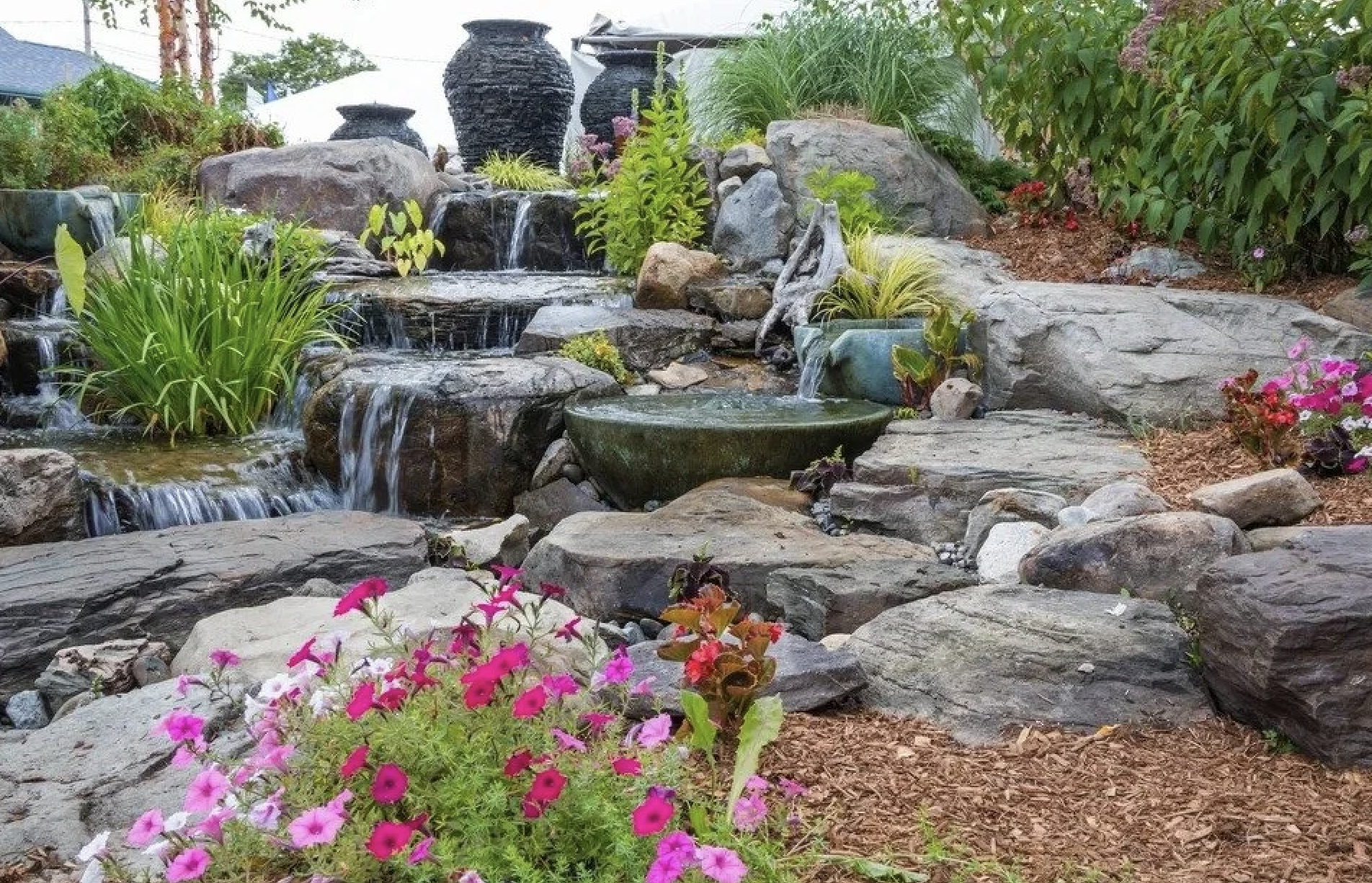
Where the water goes when it is not running is the question water feature builders ask before anything else on a Menomonee Falls, WI site. It sounds like a maintenance detail. It decides the location, the depth, the power run and the shape of the whole feature.
Villani Landshapers has spent more than 20 years designing and building water features and outdoor living spaces across southeastern Wisconsin, with an in-house design process, 3D renderings and a workmanship warranty on every project.
Our designer and estimator prepare the landscape design and proposal after a site walk, because the walk is where a feature is made practical or quietly made into a problem. These are the conditions that settle it.
Related: Water Feature Contractor in Menomonee Falls, WI: What to Look For
What Does Grade Have To Do With A Water Feature?
Everything. Moving water needs a fall to work with, and a flat yard means building one, which means importing soil and blending it so the result does not read as a mound dropped on a lawn.
Just as importantly, surface water crossing the rest of the property has to move past the feature rather than into it. A basin collecting runoff after every storm turns into a silt trap and a maintenance argument. Roof drainage, a driveway edge or a neighbor's downspout can all be feeding the spot that looks like the obvious location.
Grade also decides what the feature looks like from where you sit. A drop read correctly gives you a waterfall visible from the patio, while the same drop misread puts the interesting side of the stone facing the property line.
How Close Does Power Need To Be?
Closer than most people plan for. Pumps, filtration and any lighting want a dedicated circuit with protection, and that run gets trenched at the same time as the feature rather than added afterward.
Distance affects pump sizing as well, since a long run costs pressure. A feature at the back of a large lot can need a bigger pump for the same visible flow, which raises both the install cost and the running cost for as long as the owner has it.
Working the electrical into the excavation is one of the clearest signs a builder has done this before. Trenching a finished lawn or cutting a new patio to reach a pump is a cost nobody wants to discover in month two.
What Happens To The Feature In A Wisconsin Winter?
That depends on what gets built, and the answer belongs in the design conversation rather than the first October. Some designs are drained and shut down for the season. Some run through the winter and produce ice formations that are among the better reasons to own one.
Either way, the plumbing has to be detailed so it can be cleared, and the pump has to be reachable without dismantling stonework. A pump vault set where a person can actually open it is worth more in February than any detail on the face of the feature.
Freeze and thaw also work on the stone itself. Setting boulders and coping so water sheds off them rather than sitting in the joints keeps a feature looking the same in year ten as it did in year one.
Related: Landscape Design Services in Menomonee Falls, WI, for a Yard You’ll Actually Use
How Much Upkeep Does The Owner Actually Take On?
Less than a pond's reputation suggests, and more than nothing. A pondless design carries the lowest load, because the reservoir sits below grade and there is no open water to manage.
A planted pond asks for seasonal attention to plants and filtration, along with a routine for skimming leaves in the fall. None of it is difficult, though it is a standing commitment rather than a one-time build.
Being honest about which one suits your appetite is more useful than choosing on appearance alone. The water features we design range across both, and the maintenance conversation happens before the design is finalized rather than after.
Where Should The Feature Sit Relative To The House?
Within earshot of wherever you actually sit. A feature placed at the far boundary looks correct on a plan and does nothing for the space you use in the evening.
Sound carries a surprisingly short distance outdoors, so proximity to the patio or the window you open in summer matters more than a symmetrical location. Traffic noise and a neighbor's air conditioner compete with it, which is another argument for placing the feature close rather than centering it in the yard.
Sightlines matter as much as sound. A feature you can see from the kitchen window earns its cost through the whole year, including the months nobody is sitting outside.
What Is A Realistic Project Size?
Larger than a weekend project, once everything behind the water is counted. Excavation, liner or basin work, stone setting, plumbing and the electrical run each take their own time, and a crew is on site for days rather than hours.
That is also why a small bubbling rock and a streambed with two drops sit at genuinely different points on a proposal. The visible stone is a modest share of the cost on either one.
Knowing the practical floor early saves everyone a conversation. Our designer can tell you at the site walk whether the idea you have in mind fits the space and the budget you have for it.
Start With A Site Walk In Menomonee Falls
If moving water is on the list for next season, fall is a good moment to look at the site, while drainage patterns are still visible after a rain.
Villani Landshapers will walk the property, work out where a water feature can sit without fighting the grade, and have a designer and estimator put a plan and a proposal together from there.
Reach out to our team for a water feature quote.
In Summary
Does a water feature attract mosquitoes?
Mosquitoes need still water to breed, so a feature with adequate circulation and no dead corners does not give them anywhere to develop. The risk sits in stagnant areas. A feature shut down for a season and left holding water is the situation to watch.
How noisy is a waterfall next to a patio?
Volume is adjustable at the design stage. Villani Landshapers sets drop height and the way water meets the stone below to suit the space, so the same flow can read as a trickle or as steady white noise. Deciding that before construction is far easier than changing it afterward.
Can a water feature be added to a yard that is already finished?
Access is the constraint rather than the design. Excavation equipment needs a route in, and repairing turf or paving along that route belongs in the price. On tight lots the work is sometimes done by hand, which changes the timeline more than the design.
Related: Where Water Becomes the Centerpiece: Ideas From Expert Water Feature Builders